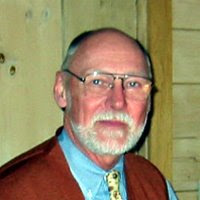
Not a problem. There I was, all prepared for projectile vomit, with a waterproof wastebasket and towel by the bed, and nothing happened. What a relief. The only apparent side effect is constipation.
Turns out this is a side effect of the anti-nausea medication, Zofran. I learned this little tidbit during a visit to my radiation oncologist today in Chapel Hill. I also learned that the Cyberknife radiation treatment three months ago did what it was supposed to do - shrunk the tumor on my heart very significantly, from 1.6 cm to 1 cm. Yea!
The temodar treatment continues for 4 more days. Based on last nights experience, I'm planning on playing golf tomorrow morning.
Wednesday, September 30, 2009


Tuesday, September 29, 2009
Beginning Treatment
Fed Ex is on the job - the chemotherapy drugs arrived today. Temodar (temozolomide), the jet fuel based chemo drug, Zofran (ondansetron HCL) and Prochlorper, both anti-nausea drugs. Zofran is taken before the Temodar to prevent nausea and vomiting, the other afterward, as needed, to prevent "breakout out events."
Since I haven't taken any drugs yet, there's not much to report. I will say how blessed I feel to have Medicare Part D and my supplemental insurance covering the Temodar costs - $2,500 for five days worth of pills.
Drum roll ...
Since I haven't taken any drugs yet, there's not much to report. I will say how blessed I feel to have Medicare Part D and my supplemental insurance covering the Temodar costs - $2,500 for five days worth of pills.
Drum roll ...
Saturday, September 26, 2009
Finally...
Yesterday, after seven weeks of waiting, I finally heard from Dana-Farber that my tumor tissue did not show evidence of the C-KIT mutation needed to participate in the Gleevec trial. The news was anti-climactic, because I had a CT scan on Thursday which showed continued tumor growths and my doctor and I felt more aggressive treatment was needed now.
The bottom line is that I will be starting on Temodar (temozolomide) on Monday. Temodar is an alkylating agent most active in the resting phase of a cell, but is non-cycle non-specific. It is classed as a Hydrazine or Triazine, which also include Altretamine, Procarbazine, and Dacarbazine. Like Dacarbazine, Temodar is a "pro-drug," which needs to be transformed to its active state by the patient's metabolism.
After nearly two months of waiting, it's pretty cool how fast things moved once the decision was made. A lab tech appeared and took blood samples for analysis, followed by a nurse who gave me a flu shot, then the nurse navigator took me down to the person who handles chemo prescriptions, who had already figured out how this was going to be paid for. All she needed to know was when I wanted to start. If I had said, "today,' she would have had the scrips (Temodar, plus two anti-nausea drugs) couriered over from the provider. Since I opted for Monday, the drugs will be sent to me at home.
Treatment consists of three 100 mg capsules taken two hours after my last meal each day for five consecutive days, preceded by a Zofran tab (anti-nausea) thirty minutes before the Temodar. There is also another anti-nausea drug to be taken every six-hours. (Guess what's a major side effect of Temodar). The five-day pill-taking cycle is followed by 23 days of doing nothing, other than recuperating from any side effects. I've been told I will be very fatigued on days 6 and 7.
Other side effects include the possibility of hair thinning, anorexia, headache, constipation, and myelosuppression (low blood counts). The last could lead to anemia and a weakened immune system, hence, the flu vaccination.
The plan is to do two 28-day cycles of Temodar, then, depending upon the outcome, decide what to do next. Stay tuned for progress reports.
The bottom line is that I will be starting on Temodar (temozolomide) on Monday. Temodar is an alkylating agent most active in the resting phase of a cell, but is non-cycle non-specific. It is classed as a Hydrazine or Triazine, which also include Altretamine, Procarbazine, and Dacarbazine. Like Dacarbazine, Temodar is a "pro-drug," which needs to be transformed to its active state by the patient's metabolism.
After nearly two months of waiting, it's pretty cool how fast things moved once the decision was made. A lab tech appeared and took blood samples for analysis, followed by a nurse who gave me a flu shot, then the nurse navigator took me down to the person who handles chemo prescriptions, who had already figured out how this was going to be paid for. All she needed to know was when I wanted to start. If I had said, "today,' she would have had the scrips (Temodar, plus two anti-nausea drugs) couriered over from the provider. Since I opted for Monday, the drugs will be sent to me at home.
Treatment consists of three 100 mg capsules taken two hours after my last meal each day for five consecutive days, preceded by a Zofran tab (anti-nausea) thirty minutes before the Temodar. There is also another anti-nausea drug to be taken every six-hours. (Guess what's a major side effect of Temodar). The five-day pill-taking cycle is followed by 23 days of doing nothing, other than recuperating from any side effects. I've been told I will be very fatigued on days 6 and 7.
Other side effects include the possibility of hair thinning, anorexia, headache, constipation, and myelosuppression (low blood counts). The last could lead to anemia and a weakened immune system, hence, the flu vaccination.
The plan is to do two 28-day cycles of Temodar, then, depending upon the outcome, decide what to do next. Stay tuned for progress reports.
Tuesday, September 15, 2009
Side Effects II
It's all in the timing,
I've been waiting over five weeks to hear whether or not I have the appropriate tumor gene mutation (C-KIT) to participate in a Gleevec trial. I was supposed to know within three weeks.. This was to be my first choice of treatments.
This morning, the Wall Street Journal published an article on "Living with a Lifesaving Drug's Side Effects" (WSJ, Thursday, September 15, 2009, D3). The gist of the article is that some lifesaving cancer treatments produce side effects that "... threaten the quality of their prolonged lives" and we're not talking about minor changes in lifestyle.
Wouldn't you know it, the featured example was -- Ta Dah -- Gleevec. I'm living a normal, symptom-free life, despite the presence of melanoma mets in my lungs, liver, and heart area. When I start chemo, clearly, my life will no longer be "normal." How different life will be cannot be predicted in advance, but neither can the efficacy of the treatment.
At age 74, which is better - a few good months or a few more lousy months/years?
I've added several web links, prefaced by SE, in the sidebar, where you can find more information about the side effects of specific drugs; however, you won't know your actual side effects, or their severity, until you begin treatment.
Timing? If I had received the gene analysis as originally proposed, I would already be committed to treatment or no longer considering Gleevec and this brain twister would be academic.
I've been waiting over five weeks to hear whether or not I have the appropriate tumor gene mutation (C-KIT) to participate in a Gleevec trial. I was supposed to know within three weeks.. This was to be my first choice of treatments.
This morning, the Wall Street Journal published an article on "Living with a Lifesaving Drug's Side Effects" (WSJ, Thursday, September 15, 2009, D3). The gist of the article is that some lifesaving cancer treatments produce side effects that "... threaten the quality of their prolonged lives" and we're not talking about minor changes in lifestyle.
Wouldn't you know it, the featured example was -- Ta Dah -- Gleevec. I'm living a normal, symptom-free life, despite the presence of melanoma mets in my lungs, liver, and heart area. When I start chemo, clearly, my life will no longer be "normal." How different life will be cannot be predicted in advance, but neither can the efficacy of the treatment.
At age 74, which is better - a few good months or a few more lousy months/years?
I've added several web links, prefaced by SE, in the sidebar, where you can find more information about the side effects of specific drugs; however, you won't know your actual side effects, or their severity, until you begin treatment.
Timing? If I had received the gene analysis as originally proposed, I would already be committed to treatment or no longer considering Gleevec and this brain twister would be academic.
Tuesday, September 1, 2009
Guided Imagery for Self-Healing
"Truth in Advertising" - this post tells you why imagery is important to healing, not how to do it.
Guided Imagery for Self-Healing is the title of a book by Martin L. Rossman, M.D. (see "Books & Articles" sidebar). The title also serves well as an introduction to another aspect of the mind-body connection.
Can you heal yourself by using your imagination?
We know that we can be "worried sick," why not imagined healthy?
Ever had a nightmare and awakened terrified, in a cold sweat, with a pounding heart?
The images created by your brain (imagination) produce the same physiological fight-or-flight response that would occur when confronted by the real thing. Film and TV images cause us to laugh, cry, sweat, faint and other emotional responses. Imagined images can, and do, produce the same physiological effects as externally generated images. From here, it is a small step to see how imagery can support wellness, too.
Research in psychoneuroimmunology (PNI) (cf my August 31, 2009 post) has identified a number of mechanisms that help us to understand how images affect the immune system. For example, research at Georgetown University by Nichols Hall has shown that visualizing an active immune system produces increased levels of the hormone alpha-thymosin which increases production and activation of T-cells, an essential immune system function. A 1996 meta-research review by Dr. Karen Olness at Case Western Reserve, found 18 out of 22 studies investigating whether or not the use of imagery can affect the production and activation of T-cells reported positive results.
In addition to direct effects, such as immune system support, imagery can be used for stress reduction, too. Stress has negative physiological effects, which lead to high blood pressure and other heart diseases, over-eating and obesity, diabetes, asthma, cramps and muscle pain, insomnia, headaches, and many other physical symptoms. Cancer patients, as I can attest, suffer from stress. Stress reduction using guided imagery or other relaxation techniques (breathing techniques, hypnosis, meditation, chanting, etc)are a useful first step toward attaining "right-mindedness" for the effective use of imagery for self-healing.
Everyone has the capacity to improve wellness through imagery; not everyone is willing to make the effort. The first requirement is the "willing suspension of disbelief;" the second is proper technique; and, the third is practice, practice, practice.
It's just like golf. Anyone can hit a golf ball; the hard part is to consistently hit it well. First, you have to believe you can hit the shot (visualize it); next, you strike the ball well, and lastly you practice doing the first two over and over again until you achieve automaticity - that is, to be able to repeat the stroke without conscious thought - the golfer's mantra: "Empty mind, Loose body"
Like golf, to use imagery to promote self-healing, you must believe that it can help the healing process,or at least willingly suspend disbelief; learn to practice effective techniques for relaxation and visualization; and, practice, practice, practice.
There are dozens of books, tapes, CD's, and DVD's available to assist in learning effective techniques, but beware, there is a lot of woo-woo stuff out there, so choose carefully. For those of us who need a "pro" to guide our practice, I suggest seeking out a licensed practitioner (M.D., Ph.D.)who is associated with a teaching hospital and specializes in pain management and cancer therapy, or an established center of practice, such as the Simonton Cancer Center.
Here is a non-exhaustive list of practitioners/authors/researchers for your use in seeking resources: Jeanne Achterberg,PhD; David Bresler,PhD,LAc; Hyla Cass,MD; James S. Gordon,MD; Stanley Krippner,PhD; Lewis Mehl-Madrona,MD,PhD; Emmett Miller,MD; Dean Ornish,MD; Kenneth R. Pelletier, PhD,MD(hc); Martin Rossman,MD; Francine Shapiro,PhD; C. Norman Shealy,MD; David Sobel,MD; Andrew Weil,MD.
Keep your eye on the ball and practice, practice, practice.
Guided Imagery for Self-Healing is the title of a book by Martin L. Rossman, M.D. (see "Books & Articles" sidebar). The title also serves well as an introduction to another aspect of the mind-body connection.
Can you heal yourself by using your imagination?
We know that we can be "worried sick," why not imagined healthy?
Ever had a nightmare and awakened terrified, in a cold sweat, with a pounding heart?
The images created by your brain (imagination) produce the same physiological fight-or-flight response that would occur when confronted by the real thing. Film and TV images cause us to laugh, cry, sweat, faint and other emotional responses. Imagined images can, and do, produce the same physiological effects as externally generated images. From here, it is a small step to see how imagery can support wellness, too.
Research in psychoneuroimmunology (PNI) (cf my August 31, 2009 post) has identified a number of mechanisms that help us to understand how images affect the immune system. For example, research at Georgetown University by Nichols Hall has shown that visualizing an active immune system produces increased levels of the hormone alpha-thymosin which increases production and activation of T-cells, an essential immune system function. A 1996 meta-research review by Dr. Karen Olness at Case Western Reserve, found 18 out of 22 studies investigating whether or not the use of imagery can affect the production and activation of T-cells reported positive results.
In addition to direct effects, such as immune system support, imagery can be used for stress reduction, too. Stress has negative physiological effects, which lead to high blood pressure and other heart diseases, over-eating and obesity, diabetes, asthma, cramps and muscle pain, insomnia, headaches, and many other physical symptoms. Cancer patients, as I can attest, suffer from stress. Stress reduction using guided imagery or other relaxation techniques (breathing techniques, hypnosis, meditation, chanting, etc)are a useful first step toward attaining "right-mindedness" for the effective use of imagery for self-healing.
Everyone has the capacity to improve wellness through imagery; not everyone is willing to make the effort. The first requirement is the "willing suspension of disbelief;" the second is proper technique; and, the third is practice, practice, practice.
It's just like golf. Anyone can hit a golf ball; the hard part is to consistently hit it well. First, you have to believe you can hit the shot (visualize it); next, you strike the ball well, and lastly you practice doing the first two over and over again until you achieve automaticity - that is, to be able to repeat the stroke without conscious thought - the golfer's mantra: "Empty mind, Loose body"
Like golf, to use imagery to promote self-healing, you must believe that it can help the healing process,or at least willingly suspend disbelief; learn to practice effective techniques for relaxation and visualization; and, practice, practice, practice.
There are dozens of books, tapes, CD's, and DVD's available to assist in learning effective techniques, but beware, there is a lot of woo-woo stuff out there, so choose carefully. For those of us who need a "pro" to guide our practice, I suggest seeking out a licensed practitioner (M.D., Ph.D.)who is associated with a teaching hospital and specializes in pain management and cancer therapy, or an established center of practice, such as the Simonton Cancer Center.
Here is a non-exhaustive list of practitioners/authors/researchers for your use in seeking resources: Jeanne Achterberg,PhD; David Bresler,PhD,LAc; Hyla Cass,MD; James S. Gordon,MD; Stanley Krippner,PhD; Lewis Mehl-Madrona,MD,PhD; Emmett Miller,MD; Dean Ornish,MD; Kenneth R. Pelletier, PhD,MD(hc); Martin Rossman,MD; Francine Shapiro,PhD; C. Norman Shealy,MD; David Sobel,MD; Andrew Weil,MD.
Keep your eye on the ball and practice, practice, practice.
Subscribe to:
Comments (Atom)